


The AI industry loves to talk about HITL — Human-in-the-Loop — as the solution to AI going rogue. But the theme emerging from the Society for Industrial and Organizational Psychology conference was more ambitious: instead of simply keeping humans in the loop, AI projects should be centered on the human from the start, with AI strategically injected into the inefficient processes that humans struggle with most.
This takes me back to the process reengineering boom of the late 1990s — which may date me, but I believe is an important reminder of how to do it right.
Been Here Before
Back in the late-90s, as a freshly minted MBA, I joined tens of thousands of young consultants pouring into Big 5 (at the time) firms to help companies race against the Y2K clock — mostly by replacing aging mainframe systems with modern client-server solutions. We fell into three groups: technology consultants who configured the new systems, process consultants like me who mapped current and future state process designs, and change management (or people) consultants who orchestrated the human side of the transition.
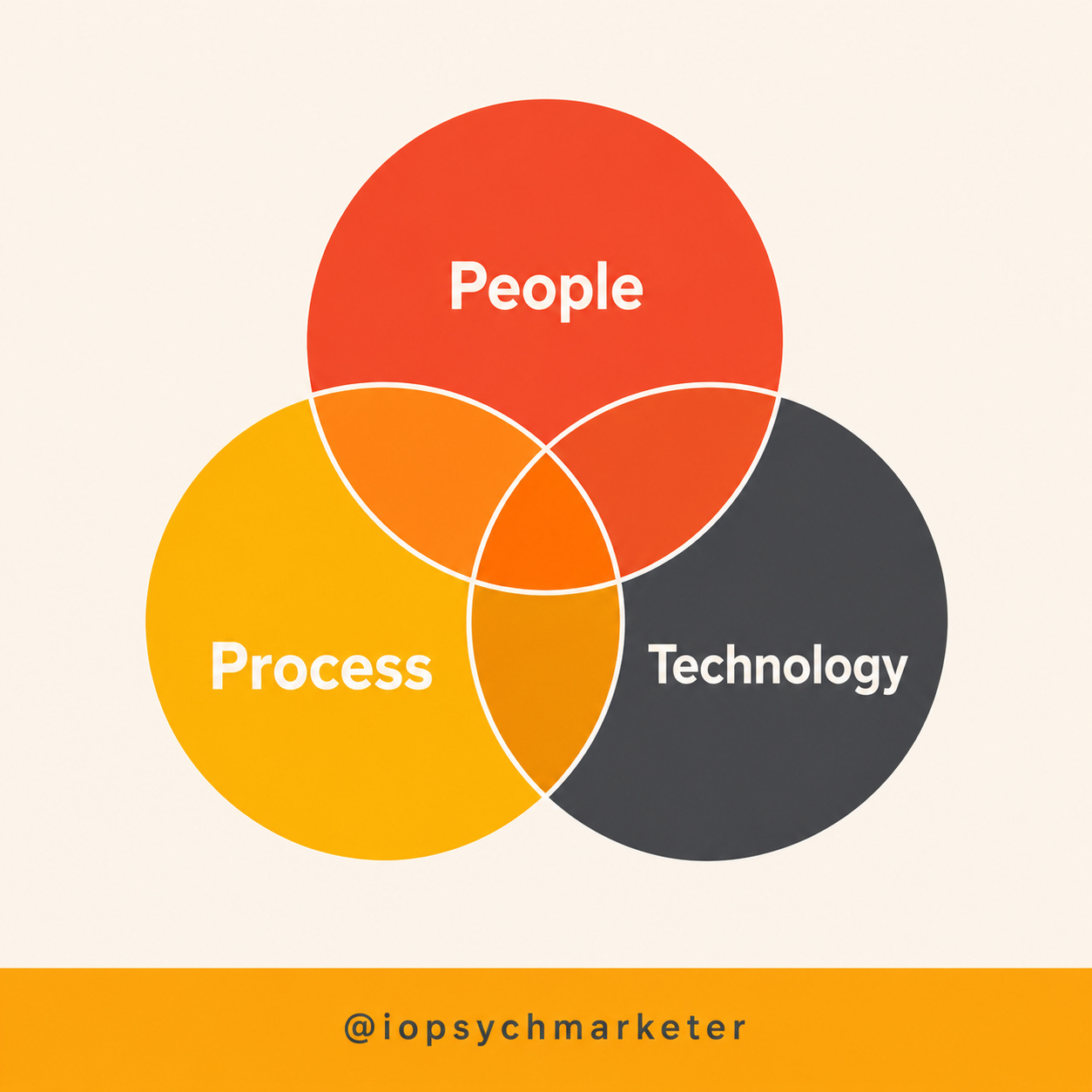
I quickly became a specialist in call center processes, traveling the world — from Oshkosh, Wisconsin to Düsseldorf to Melbourne — sitting alongside agents for days, listening to calls and running workshops to understand what was working and what wasn’t. The people on the front line always knew where the real problems were and offered the best ideas and solutions around where we could build efficiencies. Through time study analysis, we built models, and calculated the cost savings — measured, as was the custom of the era, in FTEs.
In hindsight, I now realize how this work laid the foundation for subsequent layoffs — once the new systems went live and the Y2K projects dried up, the efficiencies we had so carefully modeled became the justification for cutting headcount. At the time, I was too young and too caught up in the excitement of my expense account and frequent flyer miles to appreciate these FTEs represented the real people I sat beside, and only later did I realize this work was a major contributor to the dot-bust recession of the early 2000s when so many of my tech friends found themselves moving from “millionaires on paper” to barely making ends meet.
I helped build that playbook. Then we abandoned it.
Today’s Re-engineering: Tech, Without the People or the Process
Today’s AI-fueled transformations are taking a markedly different approach — and a more reckless one. Without the forcing function of an apocalyptic deadline like Y2K, leaders are somehow moving even faster, driven in part by pressure to justify staggering infrastructure costs. The irony is that the math isn’t even working out: according to Axios, some companies are discovering that the volume of AI agent requests is actually costing them more than the human employees they replaced and they’ve blown through their annual token budget in less than six months. Unlike the reengineering era, these transformations are being executed without process design or change management strategies.
The result isn’t just failed deployments like those cited in a recent MIT study, but the quiet dismantling of corporate culture, job satisfaction, and organizational commitment. From an I/O standpoint, this combination is a well-documented recipe for trouble: reduced performance and productivity, withdrawal behaviors like absenteeism, presenteeism, and quiet quitting, and turnover as well as counterproductive behaviors including theft, sabotage, and aggression. It should therefore come as no surprise that 41% of Gen Z workers are actively sabotaging their employer’s AI initiatives.
Turns out, replacing humans with AI isn’t just bad for people. It may not even be good for the bottom line.
There Is a Better Way
On May 25th, Pope Leo XIV published Magnifica Humanitas — Latin for “Humanity in Its Grandeur” — the first papal encyclical focused on preserving the human person in the age of artificial intelligence. Upon its release, His Holiness said: “Developers bear a particular ethical and spiritual responsibility, for every design choice reflects a vision of humanity.”
Leaders bear that same responsibility in how they deploy AI within their organizations. Will we default to a HITL culture — processes built around the technology, with humans as an afterthought? Or can we take an AIITL approach: designing work around human beings first, and identifying where AI can genuinely support them?

The answer, it turns out, is hiding in the same playbook I used in the 1990s. By mapping processes and going directly to workers to understand which tasks they actually want help with, organizations can not only improve the odds of a successful AI initiative — they preserve the trust and motivation that make those initiatives worth doing in the first place. Will such efforts eliminate the risk of downsizing? Probably not. But by taking a human-centered approach, at least the tasks that do get automated will be the ones workers themselves identified as ripe for it — with their buy-in, not their blindsided shock.
From the Hawthorne Studies of the 1920s and 30s to the process reengineering boom of the 1990s, we know the playbook for redesigning systems and processes with the human at the center. It exists. We just forgot about it somewhere along the way.
AI certainly has a job to do, but by building robust process maps and job designs, not only will your people be more engaged, your AI investments are more likely to achieve the ROI you’re hoping to achieve.
Hey Julie. I see so many familiar patterns too from the days of yore. In a newsletter I penned in the 90s, a friend of mine called BPR (Business Process Reengineering) "bad practice repair." And to your point about humans in the loop, our hot take here is the Human IS the Loop. Scott just spoke about this in Milan. Take a look: https://www.linkedin.com/pulse/youre-loop-you-scott-likens-gv65e/