


I’ve always been a pre-crastinator — the person who gets things done well before the deadline, while everyone else is still thinking about starting. It can annoy teammates who don’t share my accelerated timelines. But it often comes in handy. Especially this week.
So there I was on Tuesday, attending to work, ready for my next meeting, excited to spend one last evening with my 15-year-old before she embarked on a school trip to France the next day. Or so I thought.
Then her phone rang. “Where are you guys? We’re all here at the meet-up point.”
What could have been a missed trip entirely turned out fine — thanks in no small part to my daughter and my tendency toward pre-crastination.
You see, her bags had already been packed. Missing Euros located. Documents all in order. She’d been so ahead of schedule she was resting in our new hammock enjoying the sun. When the call came, we were out the door in five minutes, drove to SFO in a record 37, and she was through security by the time I parked — with an hour to spare.

The only thing that wasn’t pre-packed was her toothbrush.
Precrastination and Personality
Precrastination is a relatively new concept, first explored by psychologist David Rosenbaum and colleagues in 2014 — defined as the tendency to complete, or at least begin, tasks as soon as possible, even at the expense of extra physical effort. German psychologist Christopher Gehrig has since produced additional research showing that pre-crastination isn’t simply the opposite of procrastination, but a separate, independent construct.
While there’s a strong negative correlation (~.7) between the two tendencies, the more interesting finding is how they relate to Big 5 personality types. While procrastination is consistently associated with lower conscientiousness and higher neuroticism, pre-crastinators score high on conscientiousness but also high (.10 coorelation) on neuroticsm. As I’ve written before, neuroticism gets a bad rap — there are plenty of valuable attributes that come with it, if you know how to use it.
Pre-crastination also maps neatly onto goal theory — specifically the satisfaction we get from completing subgoals. Checking things off early reduces cognitive load and creates a sense of forward momentum. The brain likes done. It likes it so much it will sometimes do extra work just to feel that way.
But there are downsides. Gehrig distinguishes between functional precrastination — the adaptive kind, rooted in planning and self-regulation — and the fear-based or compulsive forms, which share more with procrastination than they might appear. As he puts it, those latter forms can carry “motivational similarities with procrastination, particularly under emotional pressure.” Add to that: submitting work before it’s fully polished, answering emails too quickly, taking on more than your share, and a meaningful association with anxiety, fatigue, and burnout.
But if you tap into the superpower, it can pay off tremendously. Precrastination isn’t just doing things early — it’s knowing when early preparation creates genuine optionality. Like, say, surviving the discovery that your daughter’s flight to France is in two hours when you thought it was tomorrow.
I say the benefits outweigh the drawbacks — if you keep them in check.
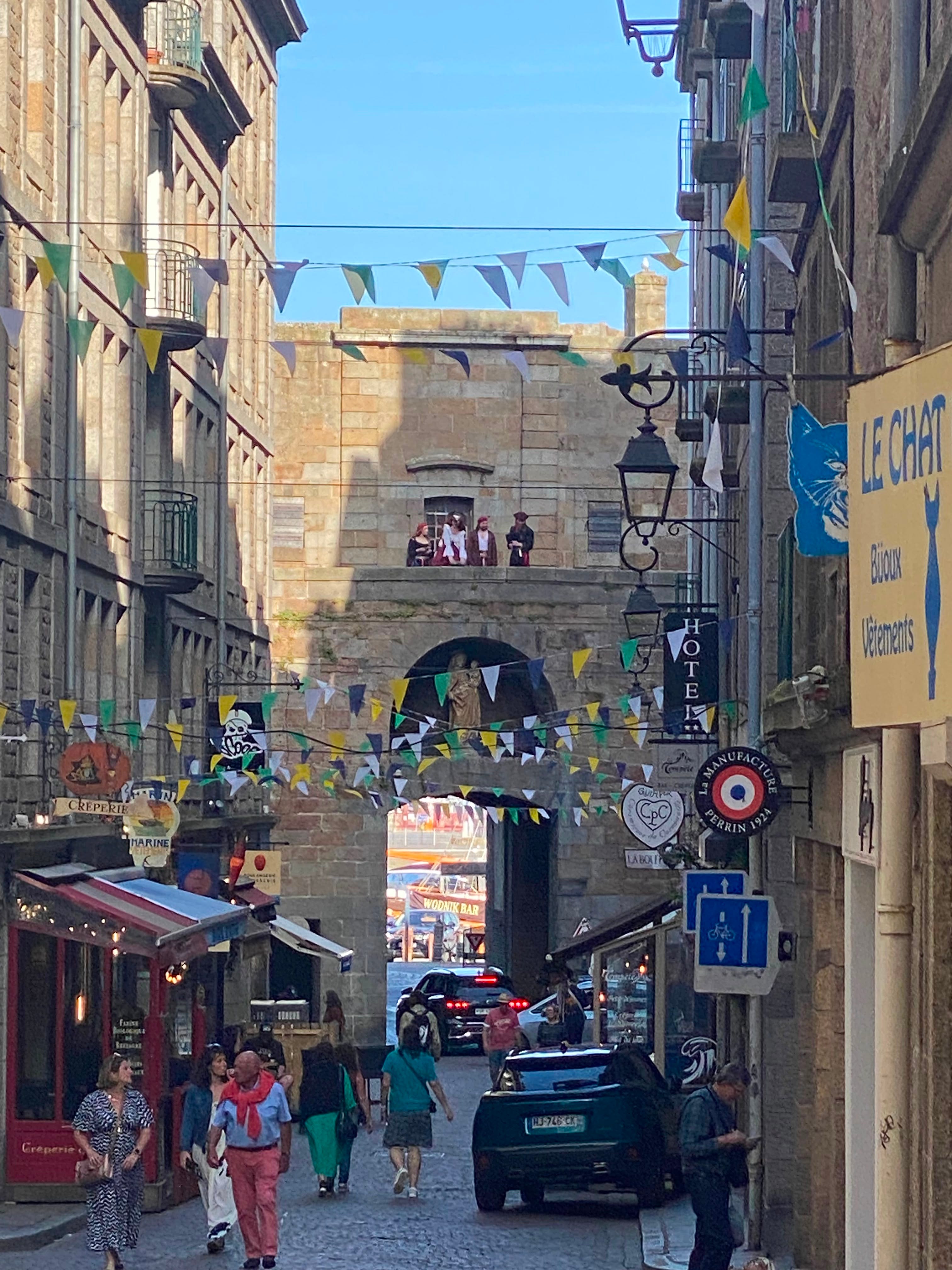
She made it to France. She picked up a toothbrush at the airport, and by the looks of it having the time of her life. I’m calling the system a success.
References
Gehrig, C., Münscher, J.-C., & Herzberg, P. Y. (2023). How do we deal with our daily tasks? Precrastination and its relationship to personality and other constructs. Personality and Individual Differences, 201, Article 111927. https://doi.org/10.1016/j.paid.2022.111927
Gehrig, C., Herzberg, P.Y. The early bird catches the worm, but falls exhausted from the branch at dusk: developing the FIPS – Facets of (Mal)adaptive precrastination scale. Curr Psychol 44, 18831–18840 (2025). https://doi.org/10.1007/s12144-025-08454-y
Rosenbaum, D. A., Gong, L., & Potts, C. A. (2014). Pre-Crastination: Hastening Subgoal Completion at the Expense of Extra Physical Effort. Psychological Science, 25(7), 1487–1496. https://doi.org/10.1177/0956797614532657
Phew! That got me nervous at the beginning. Glad she got to France safe and on time. I realized I’m a precrastinator too. Did not know there was a neuroticism angle to it. 😅Thanks for enlightening me.