


Last week I wrote about the field of Learning & Development, a core segment of the I/O psychology field. The ultimate goal of any training effort is what I/O psychologists call the positive transfer of training, which is defined as the extent to which skills learned in training actually make it back to the job and get used.
Research points to several ways to maximize it: make the training situation as similar as possible to the real job, provide active practice in varied contexts, and create ongoing reinforcement so new behaviors stick. Training is all well and good, but it only accounts for about 10% of learning; the rest comes from coaches, managers, peers, and hands-on experience. In a way, we’re all responsible for L&D in our organizations.
70-20-10
According to research by McCall, Lombardo, and Eichinger at the Center for Creative Leadership, only 10% of learning comes from formal coursework. Another 20% comes from other people, and a full 70% comes from on-the-job experiences and challenges (McCall et al., 1988).
How we train in the corporate world looks very different from how training works when lives are actually on the line. The hours that first responders, military personnel, and medical professionals invest, not just to get deployed, but to stay credentialed, are staggering. With sports and music, training is far more rigorous than anything most of us experience at work. We often hear from iconic athletes or coaches as keynote speakers at conferences discussing leadership, but I’d argue another topic they’re experts in is the fundamentals of building learning cultures.
I’ve seen good examples and bad examples of learning cultures in my career, but to my surprise, one of the best examples I’ve seen in a long time has been aboard a 37-foot sailboat in the middle of the San Francisco Bay.
Meet Nick “Wildcard”
Living in the Bay Area, my family is surrounded by some of the best sailing (and the best sailors) in the world, and my kids and husband have recently embraced the sport through our new home away from home at the Richmond Yacht Club. Although I’m typically a fair-weather sailor, I sometimes join them on their nautical adventures, particularly for Wednesday night “Beer Can” races during the summer. Beer Can races are designed to help people develop new skills, and they give boat owners a chance to find and develop crew to join them for more competitive regattas. Yes there is a race, but how the winner is determined is somewhat of a mystery, but from what I can tell points are determined more by how many newbies were developed than who came in first over the finish line.
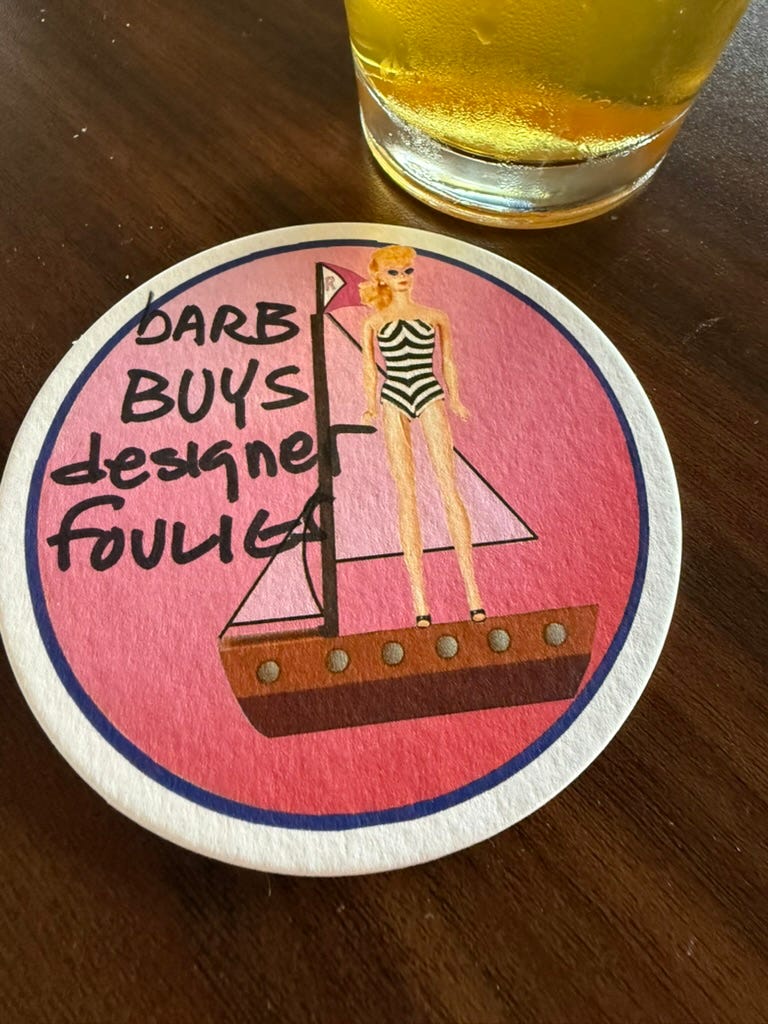
Last year’s winner of the Beer Can series was one of the club’s most popular skippers, Nick Grebe who’s affectionately known to my family as Nick “Wildcard” (so as not to be confused with all the other Nicks at the club). We first met Nick when my oldest was 12, wandering the docks looking for a boat she could crew on. He invited her aboard his boat Wildcard, a wicked fast Santa Cruz 37, and she was hooked. Soon the whole family was begging their dad each week: “Can we sail on Wildcard tonight?”
A certified level-3 sailing instructor, Nick’s coaching approach is a model any manager or L&D professional would do well to study. Everyone wants to sail with Nick, especially the young people, whom he really takes under his wing. Most of the top sailors at our club have spent time on Wildcard, not just because it’s a cool boat, but because sailing with Nick makes you a better sailor, regardless of where you start. Nick exemplifies what it looks like to build a genuine learning culture, one where everyone onboard reaches a new level on every voyage.
When I think of the learning culture Nick exemplifies, three key lessons I think are worth sharing:
1. See One, Do One, Teach One
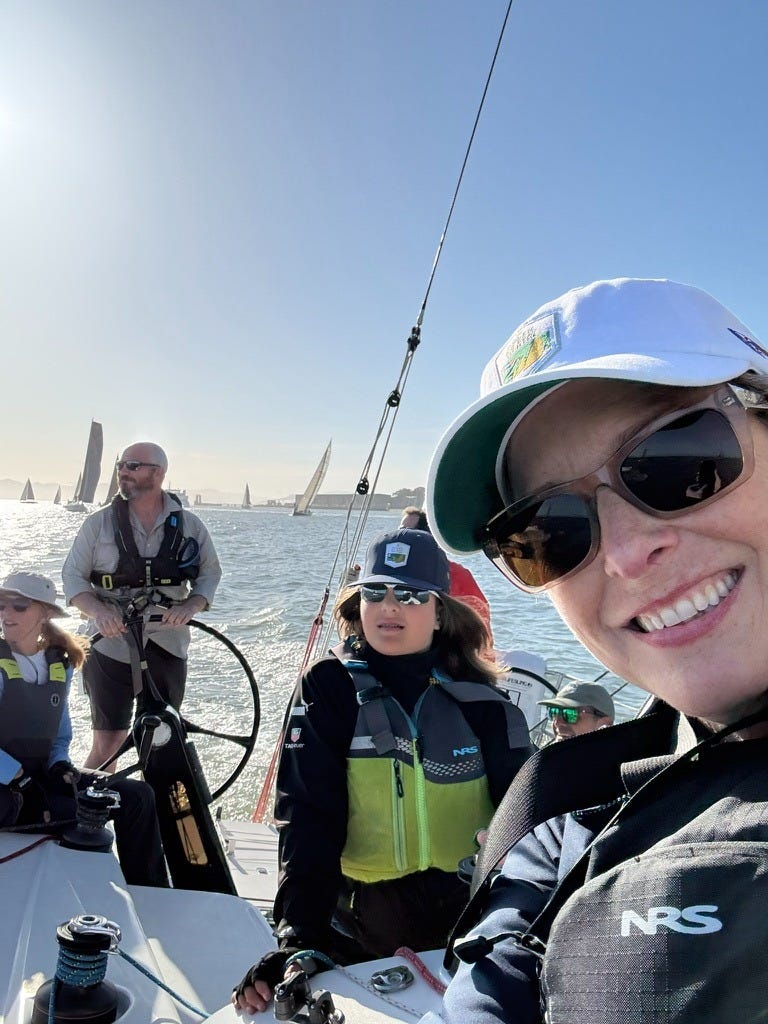
Nick’s coaching style reminds me a lot of Dr. Robbie on The Pitt, who embodies the classic medical training method: see one, do one, teach one. On the nights I do join Wildcard, I typically find Nick down below studying charts and weather forecasts while the seasoned crew hustle on deck to get the boat ready. They know just what needs to be done to rig the boat and how to assign simpler tasks to newcomers based on their assessed skill sets. While some of these folks have been sailing for decades, others only a year or so, but they all seem to know their way around Wildcard. Once we’re out on the Bay, it’s this experienced crew guiding the rookies like myself through each maneuver.
I watched this come to life during a recent race, when Nick and the team entrusted my husband Eric, who’s still getting the hang of things, with running a complicated maneuver. Nick stayed quiet while his seasoned mate, Brandon Mercer, coached him through it: “Okay Eric, talk me through what you’re going to do when we hit the mark.” Eric explained his plan, with Brandon offering minor adjustments he should make when the time comes. The principle of see, do, teach translates perfectly from the ER to the Bay, and it’s an approach we should all be applying to learning and development in our work.
2. Drill, Baby, Drill
Another cornerstone of Nick’s approach involves drills. Every night, Wildcard sets out early with plenty of time to drill before the start of the race. If the boat includes brand-new sailors, Nick will always do the “safety talk” calmly explaining some of the most important safety measures to be aware of. Although sailing is a wonderful sport there are some inherently dangerous things that can happen, because if things go wrong, they can go seriously wrong, so everyone on board needs to know these rules.
As newcomers learn port from starboard, the seasoned crew is drilling on more complex challenges and how to be ready for anything. From “man overboard” recovery to docking maneuvers, Nick creates learning opportunities that sharpen every member of the crew, especially on tricky moves they don’t use very often but need to be instinctual when it counts. That’s what a learning culture is all about: meeting people where they’re at and offering small, achievable ways to improve each and every day. It doesn’t happen in one fell swoop, but over time, with lots of reinforcement.
In one respect, corporate training actually does pretty well when it comes to the most risky challenges, in the form of annual compliance training. These are skills most employees will never need, but that are highly consequential if you get them wrong, and they need to be refreshed regularly. Harassment, money laundering, and computer hacking are rare, but the cost of failing to identify them can run into the $millions. The lawyers add new topics to annual training each year — typically after something has gone seriously wrong — but how many other small disasters happen that don’t end up in court? What drills should we all be running on a regular basis that will make our teams better?
3. Let Them Figure It Out
The hardest thing for any coach or manager is learning to let people struggle. When we see our teams flailing, every instinct tells us to step in, the L&D equivalent of Jimmy Fallon’s SNL “IT guy” sketch, where he instructs people to “mooove” and just does it himself. But teams don’t learn that way.
During a recent Beer Can race, my son and I were tasked with trimming the spinnaker, which involves constantly pulling in and letting out lines to capture the most wind. It’s a relentless, experience-driven skill that requires a great deal of nuance, and we were, frankly, not doing a great job. What struck me was that Nick’s only intervention wasn’t directed at us. It was aimed at a seasoned crew member who was coaching us too much. “Let them figure it out,” Nick said, and that was that. Giving people the space to learn by doing and make their own mistakes, without constant correction, is often the most powerful thing a coach can offer. Like the drills, by letting people make mistakes when the stakes are low, you prepare them to do it right when the stakes are high.

Bringing It Back on Land
Sailing with Nick is always fun and an opportunity for continual improvement, wherever one starts and a perfect example of how learning happens. Nick does all of this flawlessly, every Wednesday night in the summer. To recap:
See one, do one, teach one - Train your trainers and watch them shine as they upskill others. They learn better and have a real sense of pride and ownership.
Drill, baby, drill - Always be learning, meet people where they’re at and don’t forget to keep current on uncommon, but high risk skills.
Let them figure it out - Give your teams space to make mistakes in low risk environments, and resist the temptation to over-correct.
If you’re ever in Richmond and want to learn from the best, hit me up and I might be able to get you invited aboard.
Reference
McCall, M. W., Lombardo, M. M., & Morrison, A. M. (1988). Lessons of experience: How successful executives develop on the job. Lexington Books.